
China
Down roads of homes packed tightly together, where goats bleated and large dogs barked at my clicking freewheel, I searched for Henry. We’d climbed together on boulder strewn dirt roads from Lijiang, past Tiger Leaping Gorge, through Shangri-La and had agreed to meet here, in Litang, but he was nowhere to be seen.
An Unexpected Adventure
Off the main streets, in a large courtyard beside a heavy steel gate, the only other foreign faces in the town emerged from a taxi. An American called Ned, who worked at a New York language school and his friend Yorn, from Norway. As we discussed travels through China, a stooped, local man shouted Mandarin directions to a hostel up the road. I shouted back that we didn’t need the hostel. A bike and a little language knowledge had just invited me into an unexpected adventure.
With a photo of Ned’s students’ mother in hand, I hunted the crumbly streets, interviewing locals about the whereabouts of this old lady. Eventually a gate opened and a face matching the photo in my hand emerged, the lady hugged Ned before inviting us into her home. We drank yak butter tea and ate steamed buns inside the large, warm room where copper kettles exhaled aromatic steam, family photos faded on the walls and the husband’s smile beamed at us as he turned from the news on an old television. Ned had been told by his student that if he was ever in China he should visit her family, so here he was. However, he didn’t speak Chinese, so I joined as make-do translator for a couple of days.
In Search of Nomads
Seven of us were herded into a five-seater car and we bounced out of the town in search of a nomadic branch of the family. It took hours to track them down. The car stopped sporadically for chats with those in the fields. Strangers jumped in, others jumped out. On the rocky roads, passengers sprang from their seats, faces squashed against windows and heads hit the roof. We drove along cattle tracks into the vastness of green plains in a basin of towering snowcapped mountains.
A smiling nomadic yak farmer and his wife invited us into their large white yurt. A kettle sat on a black, dung stove in the middle of the room, warming the cool mountain air and producing the earthy smoke that I’d begun to associate with mountain living. Bare ground was covered with thick carpets, cushions and blankets upon which two of the three children sat; rosy cheeked and grubby handed, their shyness rapidly melting in growing familiarity of three strange westerners. The youngest child, maybe one year old, rested in a box full of wool and fur blankets, only his dirt covered hands and face poking out, his huge brown eyes watching all around him.
We sat with the family for more yak butter tea, dried yak meat and dense flatbread as I translated questions about ages, marriage and lifestyle. The father described something called Dong Chong Xia Cao, translated as “winter worm, summer grass”, a winter insect that buries itself in the summer and becomes a plant. In their summer form, these creatures are revered for their medicinal value, used in traditional Chinese medicine for centuries to provide healing qualities, give strength and act as an aphrodisiac. The mystical medicine could be found in the local area.
As the evening sky threws pastel hues of orange and purple over the mountains, the yaks were herded and tied down close to the yurt. A wolf was chased away and the calves settled with their mothers. Surrounded by the thuds and shuffling of livestock, we stood outside amidst the vastness of the mountains, looking up at a cold night sky of perfect stars and the smear of the Milky Way. The silhouettes of our hosts were cast upon the walls of their yurt, while dogs barked and strong winds howled through the valley.
Dong Chong Xia Cao
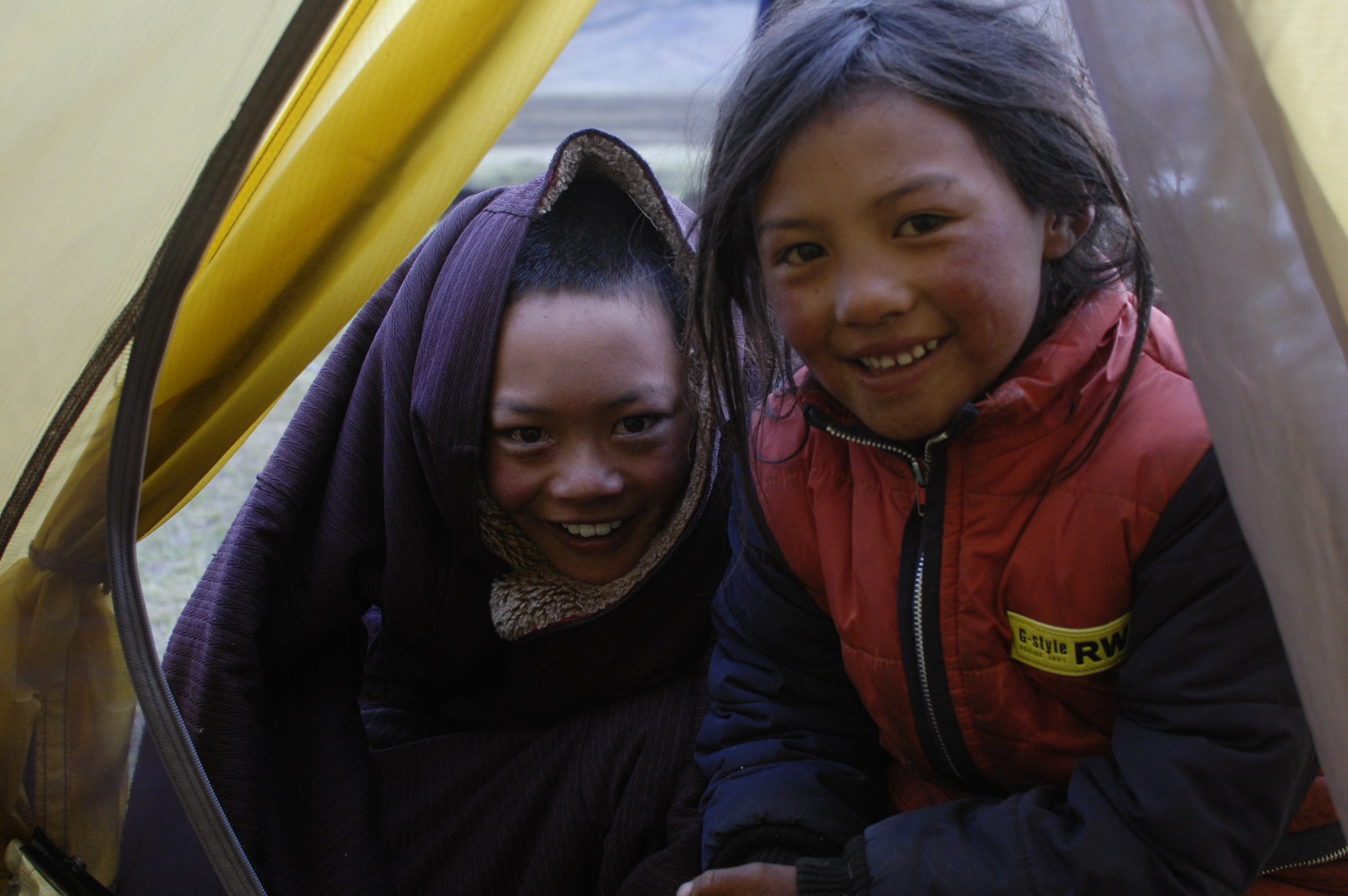
I woke early in the morning to the sound of laughter and Tibetan children pushing a yak calf into my tent. For breakfast, we ate tsampa; a dense, dry mix of barley flour, butter and a milk, in a small dish, that we pressed into small cakes and ate with our hands, after which the legendary worm-grass from last nights tale was presented. Neither Ned, Yorn or I were inclined to eat them. They looked like large maggots, warming on the stove, staring at us, taunting us. One by one we crunched, chewed and swallowed our medicinal worms, a nutty, squidgy root. Dreams of strength, healing and aphrodisiacs floated through my mind as I chewed. To sit at altitudes close to heaven, eat the sacred worm and find enlightenment, that would be the holy grail of world travel experiences. But the worm was consumed, an empty mouth opened to the delight of the hosts and the moment was over. These must have been the worms of another prescription.
We spent the morning honing traditional nomadic skills: horse riding and slingshot. The seven-year-old daughter placed a stone in her sling, spun it around her head and with a loud crack the stone flew straight and far. In my hands, stones fell to the floor, some flew left, some right and one shot backwards, whistling past Ned’s head. The worm had not given me these skills, so I decided it was probably best to stop before somebody got hurt. While the nomad father spoke to a monk and the mother saw to the baby, Ned taught the children basic English which they learnt fast. These children will never see a school, they will rarely meet other children or wander far from this valley, they will be raised to become yak farmers and their children after them, too. It is a hard life for tough people, moving with the seasons, enduring. But in thiat moment, we played, uninhibited, running around the valley, laughing without care, free spirits in a beautiful life.
Under the midday sun Ned, Yorn and I left the camp with an elderly Tibetan lady, trekking across the plains and through rivers, to the car which returned us to town. I left my new friends and family to cycle into the high mountains, through Tibetan villages and among grazing yaks. Bike and cyclist soaring harmoniously between peaks and prayer flags in a Tibet full of life, rich in flavour and colour.
